
Last updated November 15, 2026
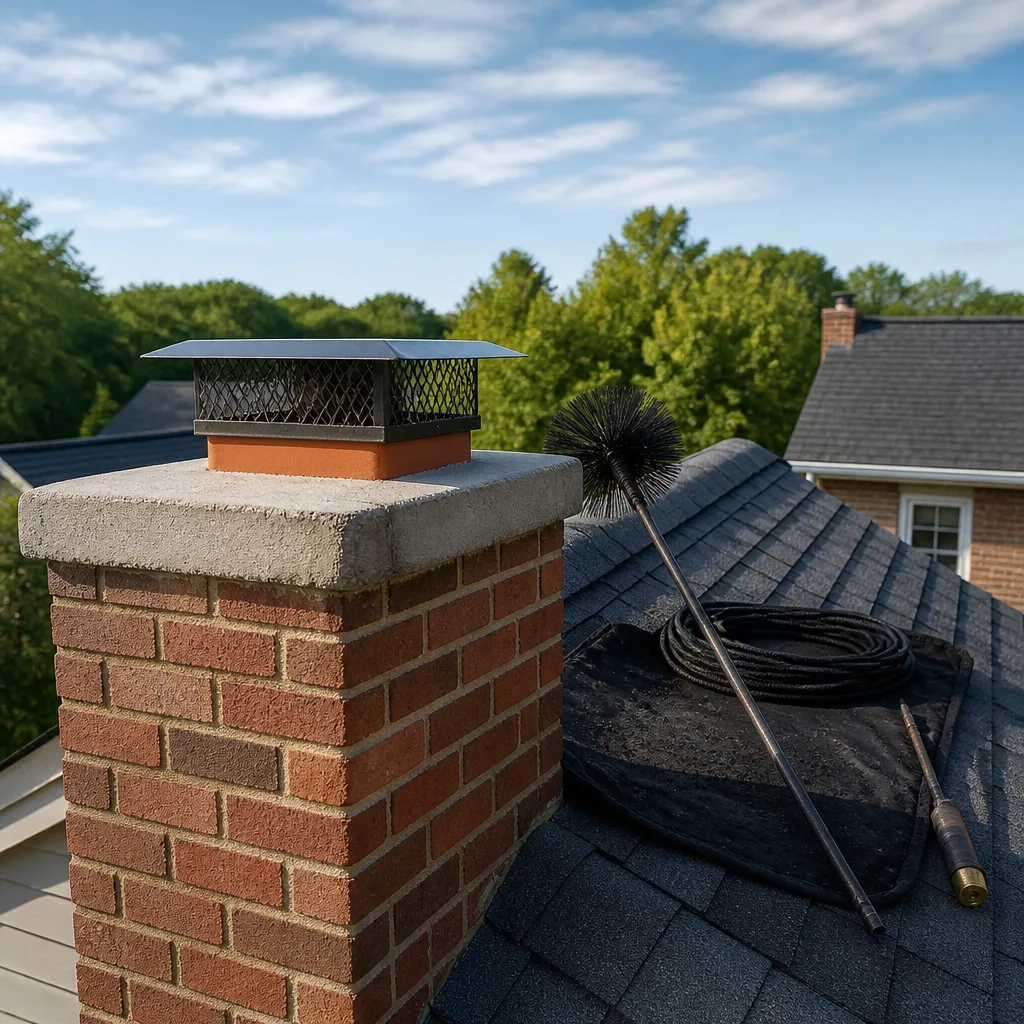 Sweep & inspection
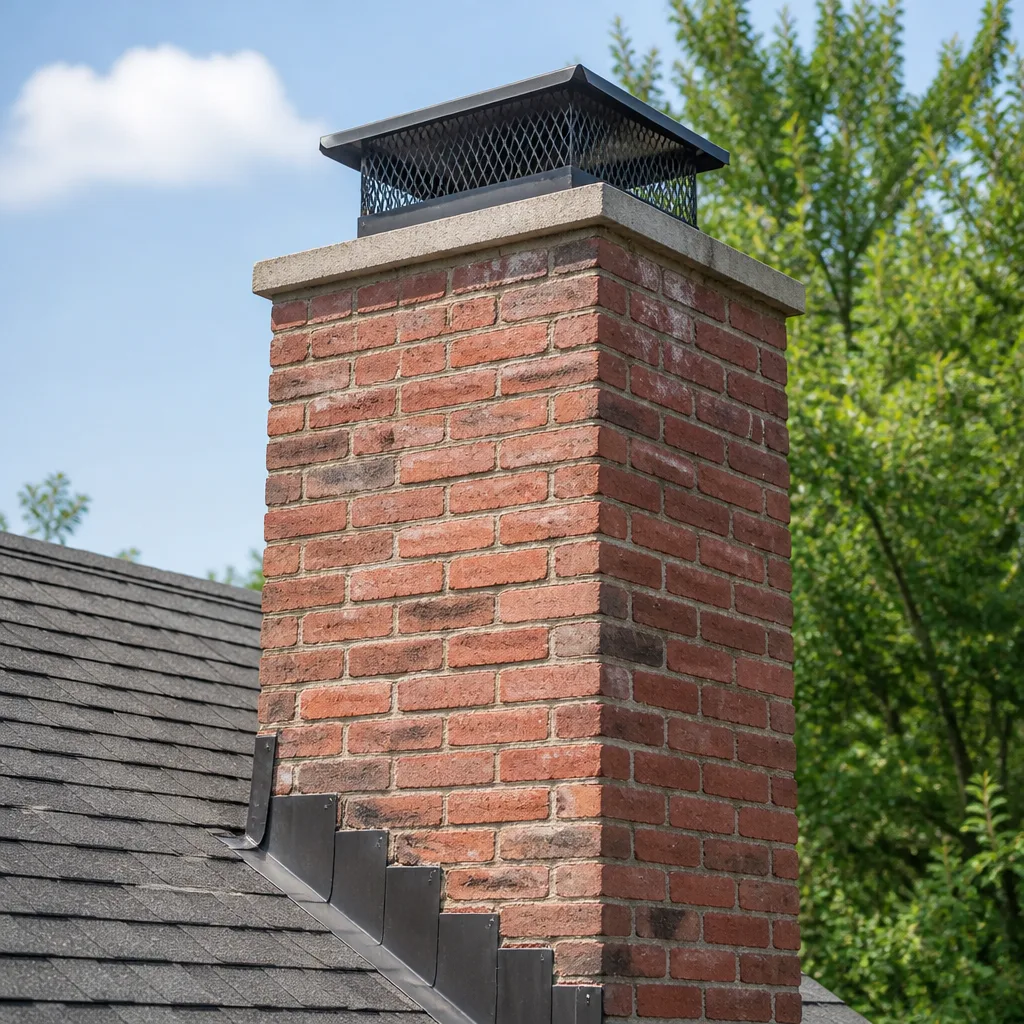 Caps & crowns
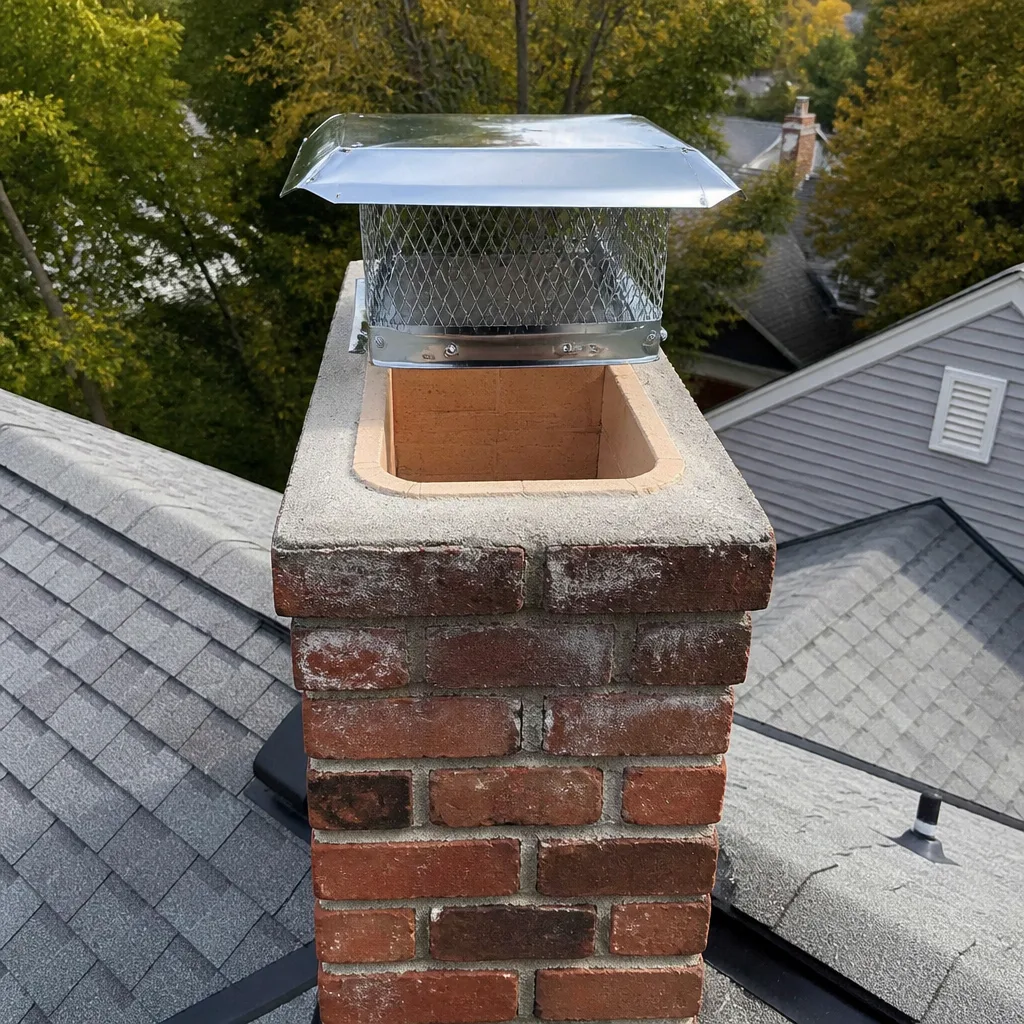 Flue relining
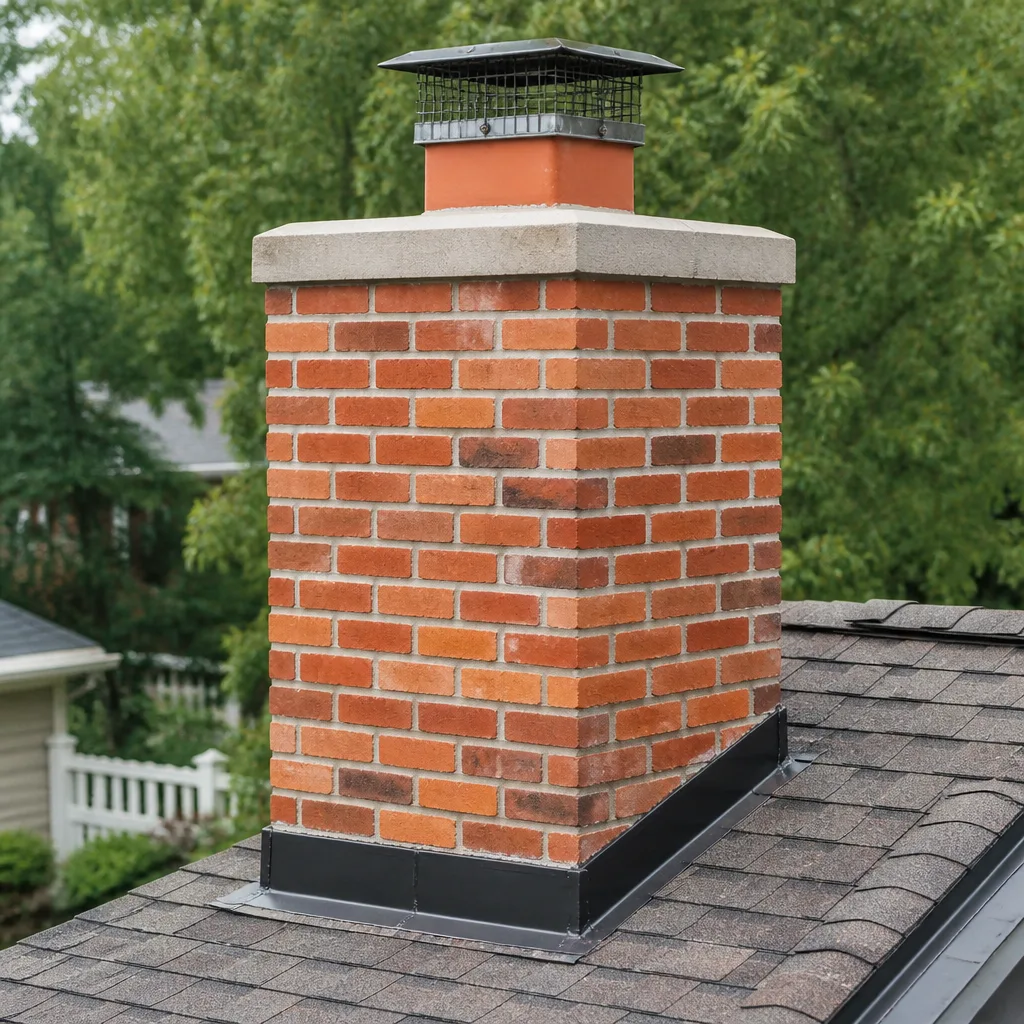 Masonry repair
 Gas fireplace service
Level 1 sweep and inspection to the NFPA 211 annual standard - flue, crown, cap, and flashing checked and photographed
Chimney sweep logs do not sweep chimneys. They loosen some creosote - which then falls where a brush and vacuum still have to collect it.
DIY vs Professional Chimney Cleaning: The The Woodlands Homeowner’s Decision Guide
A brush-and-rod kit from a home improvement store is built for a straight gas flue. Using one on an offset flue or a zero-clearance wood-burning fireplace without a camera pre-check is how homeowners bend liner joints they can’t see and can’t fix. The honest answer to DIY vs professional chimney cleaning isn’t “always hire a pro.” It’s narrower and more useful than that: DIY brushing genuinely works for a specific set of conditions, and falls apart the moment you leave them. This guide draws the line clearly so a The Woodlands homeowner can decide with facts instead of guesswork.
Quick Answer
DIY chimney cleaning is only reasonable when you have a straight flue, confirmed Stage 1 creosote, and no history of burning unseasoned wood or a chimney fire. Every other situation – offsets, Stage 2 or Stage 3 deposits, a zero-clearance fireplace, or any chimney where you can’t see the full interior – belongs with a professional who uses a camera inspection. In The Woodlands, year-round humidity and heavy live-oak pollen load the flue in ways that push most chimneys past the DIY ceiling faster than homeowners expect.
Styles & brands we work with
- Sweep & inspection
- Caps & crowns
- Flue relining
- Masonry repair
- Gas fireplace service
Table of Contents
- Where DIY cleaning genuinely works in The Woodlands
- Where DIY cleaning becomes actively risky
- What you can’t assess without a camera inspection
- The real equipment a competent DIY sweep needs
- How Gulf Coast humidity changes creosote
- DIY vs professional cost comparison
- The liability and insurance question
- How often a The Woodlands chimney needs sweeping
Where DIY cleaning genuinely works in The Woodlands
DIY brushing is a real option for a narrow, definable set of chimneys. When all the conditions below are true, a homeowner with patience and the right tools can knock down a light soot layer and keep the flue clear between professional inspections. The key word is “between” – the inspection is still the professional part.
The four conditions that must all be true:
- The flue is straight and vertical from firebox to cap. No offsets, no angle bends, no smoke chamber with unusual geometry. Offset flues are common in newer The Woodlands construction and they are where DIY brush heads get stuck or tear liner seams.
- You’ve had a professional camera inspection within the last 12-18 months and the report shows only Stage 1 creosote – the thin, dusty, flaky type that a stiff brush removes easily.
- You burn seasoned firewood only, no trash, no green wood, no construction scraps. Wet wood deposits creosote that brushes don’t touch.
- The chimney is masonry with a clay tile liner in good condition or a properly installed stainless liner. A damaged flue tile means the brush can catch on the edge and crack it further.
If any of those four fail, DIY crosses from “reasonable maintenance” into “supervised amateur work on a system you can’t see.” A chimney sweep in The Woodlands usually covers cleaning and a visual check in one visit, which is why the inspection tends to anchor the whole decision.
One honest note on the The Woodlands market: the majority of homes here are 15-30 years old, and a fair number have had a stove insert or a gas log set added at some point. Those retrofits change the flue’s effective geometry. If you didn’t install the insert yourself and don’t have documentation, assume the flue is no longer a simple straight run until a professional confirms otherwise.
Where DIY cleaning becomes actively risky
There’s a floor under the DIY ceiling, and it drops out fast in certain configurations. A homeowner who pushes past the conditions in the last section isn’t just wasting a Saturday afternoon; they’re creating conditions that can lead to a chimney fire, liner damage, or an indoor air quality problem that runs through the whole house.
The specific configurations where DIY cleaning is genuinely dangerous:
- Offset flues. A flexible brush head bends at the offset but can catch on the joint, snap a tile edge, or tear the seam of a stainless liner. You’ll feel resistance and keep pushing because you assume it’s creosote.
- Zero-clearance wood-burning fireplaces (factory-built). The flue is a stainless liner inside a metal chase and the clearances to combustibles are tight. A brush that catches on liner tabs can create a gap you can’t see, which eventually lets heat reach framing.
- Stage 2 creosote (glazed, shiny, tar-like). No hand brush will remove this. It has to be cut down with a rotary whip or chemical treatment. A homeowner who brushes over Stage 2 gets smooth glazed creosote left behind, which burns hotter than the fluffy kind.
- Stage 3 creosote (hard, baked-on layers). This is a fire risk and a call for professional intervention. Never brush it and think “good enough.”
- Any chimney with a firebox insert, baffle, catalytic combustor, or gas logs. Cleaning around these components without removing them properly redistributes debris instead of extracting it.
- Exterior chimneys. Roof access is the part most homeowners underestimate. A pitch over 6/12, a steep metal roof, or a wet day and the work becomes a fall hazard instead of a cleaning job.
We’ve seen all of these turn into repair calls. In our experience, the most common version is a homeowner who bought the standard kit, brushed what looked like a straight flue, and later found that a stainless liner seam had opened somewhere in the smoke chamber. The cleaning looked fine from the top. The liner wasn’t. chimney repair work of that type starts at a higher cost than a professional sweep would have.
Gas inserts deserve their own note. They deposit very little creosote but they do get inspected. If you have a gas insert, DIY “cleaning” isn’t the right task at all – what you need is periodic professional inspection of the vent and the unit itself, which is a different visit than a wood-burning sweep.
What you can’t assess without a camera inspection
Cleaning is the visible part of chimney work. Inspection is the part that actually protects the house, and a camera is the only way to see it. A chimney video inspection runs a lit camera from the firebox to the cap and records what the interior looks like at every height: the flue tile condition, the smoke chamber shelf, the damper frame, the liner seams if stainless, and the crown from inside.
What you cannot assess from the roof or the firebox with a flashlight:
- Whether tile joints are cracked, offset, or missing mortar in places that don’t line up with the angle you can see.
- Whether a stainless liner has a seam that opened, a hidden tear near a support bracket, or a compression fitting that’s no longer compressed.
- Whether the smoke chamber has a ridge of glazed creosote that a brush can’t reach.
- Whether the previous owner’s “recent cleaning” was actually done, and if so, what it left behind.
- Whether the crown is intact and draining away from the flue, or hairline-cracked and letting water into the masonry.
That gap matters for safety rather than cleanliness. A chimney that looks clean from the top and passes the finger test at the damper can still have a 6-inch glazed band somewhere mid-flue that will ignite the next time the firebox reaches temperature. The camera finds it. A brush does not. When we perform a camera inspection, the homeowner sees the same footage we do, and that’s the entire reason we include it in every visit rather than treating it as an upsell.
For a homeowner in The Woodlands, the schedule that makes sense is annual inspection plus cleaning when the report shows accumulation. That places a professional set of eyes on the system every year even when no cleaning is needed. If your chimney is on a two-year cycle because it burned lightly, that’s fine – but the inspection still belongs on the annual calendar.
The real equipment a competent DIY sweep needs
A $40 brush-and-rod kit does not make a chimney sweep. If you want to genuinely DIY the cleaning between professional visits, here’s the actual tool list and what each piece is for. The full kit runs $250-$500 from a reputable supplier, which is a meaningful investment for the narrow conditions we described earlier.
- Polypropylene or wire brush head matched to flue shape. Round for round flues, square for square. The brush diameter must match the flue’s inside dimension minus a small clearance. Undersized brushes leave creosote film; oversized ones jam.
- Flexible fiberglass rods (not the aluminum rods from the cheap kit). Fiberglass rods flex around a gentle offset without snapping; aluminum rods don’t. Buy at least 30 feet of rod segments. You’ll want more than you think, because a The Woodlands chimney is typically 16-24 feet plus the firebox reach.
- Dust containment system. A large canvas drop cloth, painter’s tape, and a shop vacuum with a HEPA filter staged at the firebox. Fine soot escapes a standard vacuum and settles on every horizontal surface in the room.
- Full face respirator with P100 filters. Not a dust mask. Creosote soot is a known respiratory irritant and a suspected carcinogen; a paper mask does not seal.
- Chemical creosote remover (Stage 1 and light Stage 2 only). A purpose-made powder or liquid that you burn through a hot fire to convert glazed creosote into brushable ash. This is not the same as a chimney “cleaning log” from a hardware store and should only be used on the condition confirmed by a professional inspection.
- Camera inspection. You cannot do this yourself. A homeowner can buy an endoscope, but a $60 endoscope does not have the illumination, articulation, or durability to inspect a mid-length flue. This is the boundary condition that pulls the whole DIY approach back.
- Ladder and roof safety gear. Roof boots, a harness anchor, and a ladder assessment before you climb. If the pitch is over 6/12, this step alone is why most homeowners should stop at the firebox-side brushes and leave roof access to a professional.
Compare that list to what an actual professional sweep carries: rotary whip heads, multiple brush styles, industrial HEPA vacuums, and a full inspection camera with recording. It’s a different tool class entirely, not a fancier version of the same thing.
How Gulf Coast humidity changes creosote
The Woodlands humidity works against DIY cleaning in ways that a homeowner who moved here from a drier climate often doesn’t anticipate. Creosote chemistry depends on how completely the wood burns and how quickly the flue gases cool; humidity shifts both.
Three things humidity does to a flue here:
- It slows the seasoning of firewood. A cord of wood that reads dry in Colorado reads wet in The Woodlands after 18 months unless it’s been off the ground, covered on top only, and stacked in real airflow. Wet wood burns cooler and produces more creosote.
- It encourages glazed creosote formation. When flue gases cool below roughly 250°F on the way out, creosote condenses as a liquid that then hardens into Stage 2 glaze. Long humid shoulders of the year here stretch the burn cycle enough that the flue stays cool for longer stretches after any given fire.
- It softens the “finger test” signal. Stage 1 creosote in a humid house can feel slightly gummy up close to the damper even when the mid-flue is clean and dry. Homeowners sometimes assume this means there’s more creosote than there is, or occasionally the opposite.
The practical consequence: the creosote that forms in The Woodlands more often leans toward Stage 2 than the Stage 1 that brushes comfortably remove. Rotary equipment – a spinning whip head on a flexible shaft – cuts through Stage 2 because it grinds rather than scrapes. Hand brushes, including high-quality ones, do not. If you pulled your Highpoint Chimney Sweep inspection report from last season and it showed Stage 1 only, you’re in DIY territory. If it showed Stage 2 anywhere, the DIY route ends there for the season.
The live oak canopy doesn’t help either. Pollen, small leaf litter, and the occasional acorn work into the cap and can partially block the screen. That changes draft, changes how hot the flue runs per fire, and contributes to cooler-gas condensation. A cap from a professional supplier like Famco or Copperfield is engineered to keep this material out without choking draft; a homemade screen reduces airflow and makes creosote worse, not better.
DIY vs professional cost comparison
The DIY versus professional cost question is not as straightforward as the sticker price. Here’s the honest comparison using typical The Woodlands pricing ranges. Every professional number below is an estimate; the written estimate sets the final price.
| Line item | DIY (one-time setup) | Professional visit |
|---|---|---|
| Brush head + fiberglass rods (30 ft) | $120-$220 | Included in service |
| HEPA shop vacuum + containment | $110-$180 | Included in service |
| P100 respirator | $35-$60 | Not applicable |
| Chemical creosote remover (per use) | $25-$45 | Included when needed |
| Roof safety gear | $80-$200 | Company-provided |
| Camera inspection | Not available to homeowner | Typically included with sweep |
| Typical professional sweep in The Woodlands | N/A | $185-$320, depending on flue length and access |
| Typical inspection-only visit | N/A | $120-$200 |
| Typical sweep + camera inspection bundle | N/A | $220-$350 |
Read that as a multi-year comparison rather than a single-visit one. If you buy the DIY kit for $300-$500, you’re covering roughly two professional sweep visits. After that, the DIY kit pays for itself only if all the conditions in the first section stay true and you never need the inspection the equipment can’t provide. Also add replacement brush heads and another bag of remover each season, plus the roof access work you can’t skip.
The other variable: DIY time. A proper masonry flue cleaning in a The Woodlands home takes a careful homeowner 2-3 hours including setup, containment, brushing, and cleanup. That’s fine when it goes well. When a brush catches on a liner seam, the time investment goes out the window and the professional call comes anyway, at a higher cost than if it had been called first.
The liability and insurance question
This is the part of the DIY decision homeowners ask about least and worry about most. In plain terms: a homeowner is allowed to clean their own chimney, but the evidence trail that a professional sweep provides doesn’t exist when you do it yourself. If a fire claim arises, that gap matters.
What an insurance adjuster typically wants to see after a chimney-related fire:
- Dated records of professional inspection and cleaning. A receipt with a date and a scope of work is the standard form of that record.
- Any camera inspection footage that documented the flue condition before the loss.
- Documentation of repair work done on the flue, liner, or cap, with materials named.
If you’re doing your own brushing with no inspection report, none of those exist. Coverage usually isn’t voided outright – most homeowner policies cover accidental fires regardless of who cleaned the chimney – but the path from claim to payout becomes longer, and the adjuster may question whether the chimney had been maintained to a reasonable standard. Homeowners who can produce a written inspection report from a qualified company year after year face fewer questions. That’s the quiet but real argument for professional record-keeping even when you keep brushing between visits.
There’s a second layer here that matters in The Woodlands specifically: many homes here are in HOAs and some are in special flood or fire-wildland zones where documentation expectations differ. We’re not in a position to advise on your policy; that’s between you and your carrier. But we can say plainly that a professional inspection with a written report and photo or video record is the form of evidence most homeowners want to have on hand if the question ever comes up.
The claims worry works the other direction too. A homeowner who has an inspection report showing Stage 1 creosote and light accumulation can be confident in their DIY brushing between professional visits, because the report is the safety net. Without the report, the DIY is happening blind.
How often a The Woodlands chimney needs sweeping
A wood-burning chimney in The Woodlands needs sweeping when the creosote layer reaches 1/8 inch – the same threshold the industry uses everywhere, but reached faster here because of the humidity and fuel realities we covered above. For a household that burns regularly through the cooler months, that usually means an annual sweep with inspection. For a household that burns a fire a few times a year, an annual inspection often shows no cleaning needed, and skipping the sweep that year is defensible.
A practical schedule for a The Woodlands homeowner:
- Before the first cool front. Get the chimney inspected and swept (if the report calls for it) in the weeks before burning starts. This is the one appointment that genuinely matters seasonally.
- Mid-season check. A visual look at the firebox and damper with a flashlight during the burn season catches the obvious problems (soot streaks, draft loss, smoke spillage). No professional visit needed unless something looks off.
- End of season. After the last fire, close the damper and check the cap from the ground. Animal nesting, leaf accumulation, and storm damage are the common finds.
- After any chimney fire. Even a small one. The flue needs inspection and possibly repair work before the next burn.
Gas inserts are on a different rhythm: they don’t produce the creosote volume a wood fireplace does, so the cleaning interval usually stretches, but the annual inspection is still worth keeping on the calendar. Vent-blockage and unit-condition problems don’t announce themselves the way soot does.
Common Mistakes to Avoid
- Buying the $40 hardware-store kit and calling it a sweep. That kit is designed for a straight gas flue. Using it on an offset or zero-clearance fireplace is how liner joints get bent.
- Brushing over glazed Stage 2 creosote and assuming it’s gone. Smooth glazed creosote burns hotter than the fluffy type, so skipping professional removal doesn’t improve safety, it makes it worse.
- Skipping the camera inspection “because the chimney looked clean.” From the top and from the firebox, you’re looking at a tiny fraction of the flue’s interior. Most faults live in the part you can’t see.
- Burning unseasoned wood to save a season. Green wood is the fastest path to Stage 2 in The Woodlands humidity. It costs less by the cord and more by the flue.
- Burning trash or treated lumber. It deposits corrosive material on the liner and can leave residue that a standard brush won’t remove cleanly.
- Installing a homemade spark screen or cap. It chokes draft and reduces burn temperature, which increases creosote. A purpose-engineered cap from Famco or Copperfield keeps material out without restricting airflow.
- Waiting until you smell smoke to think about it. Smoke backing into the room is a late signal of a blockage that a camera would have found in a routine inspection months earlier.
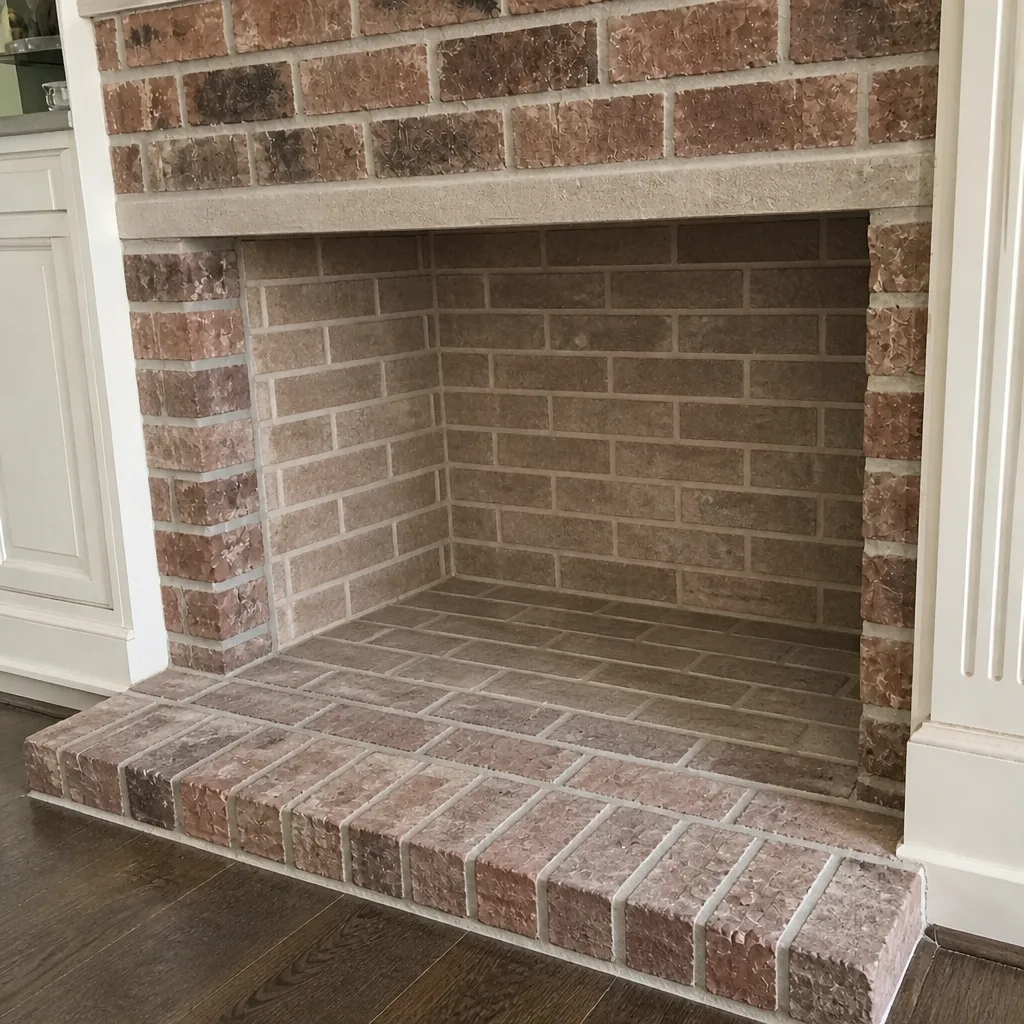
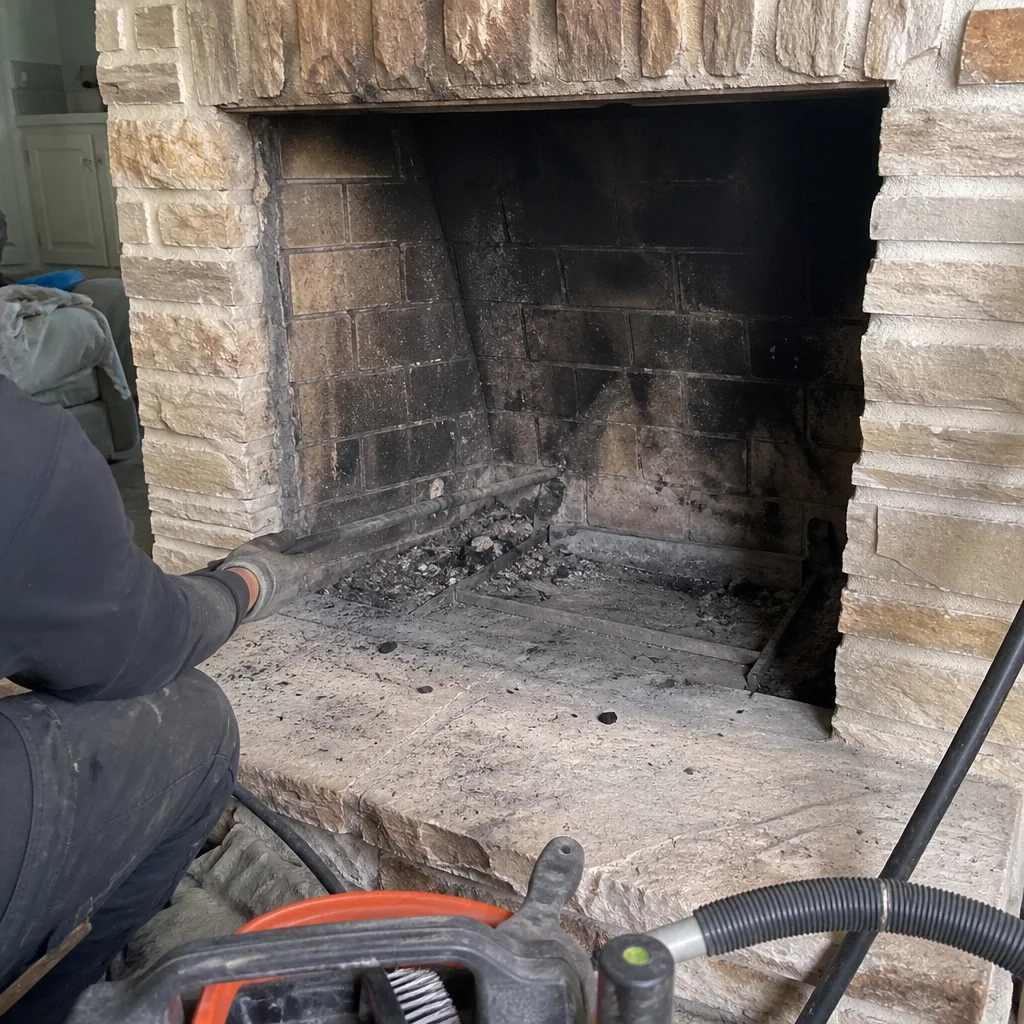
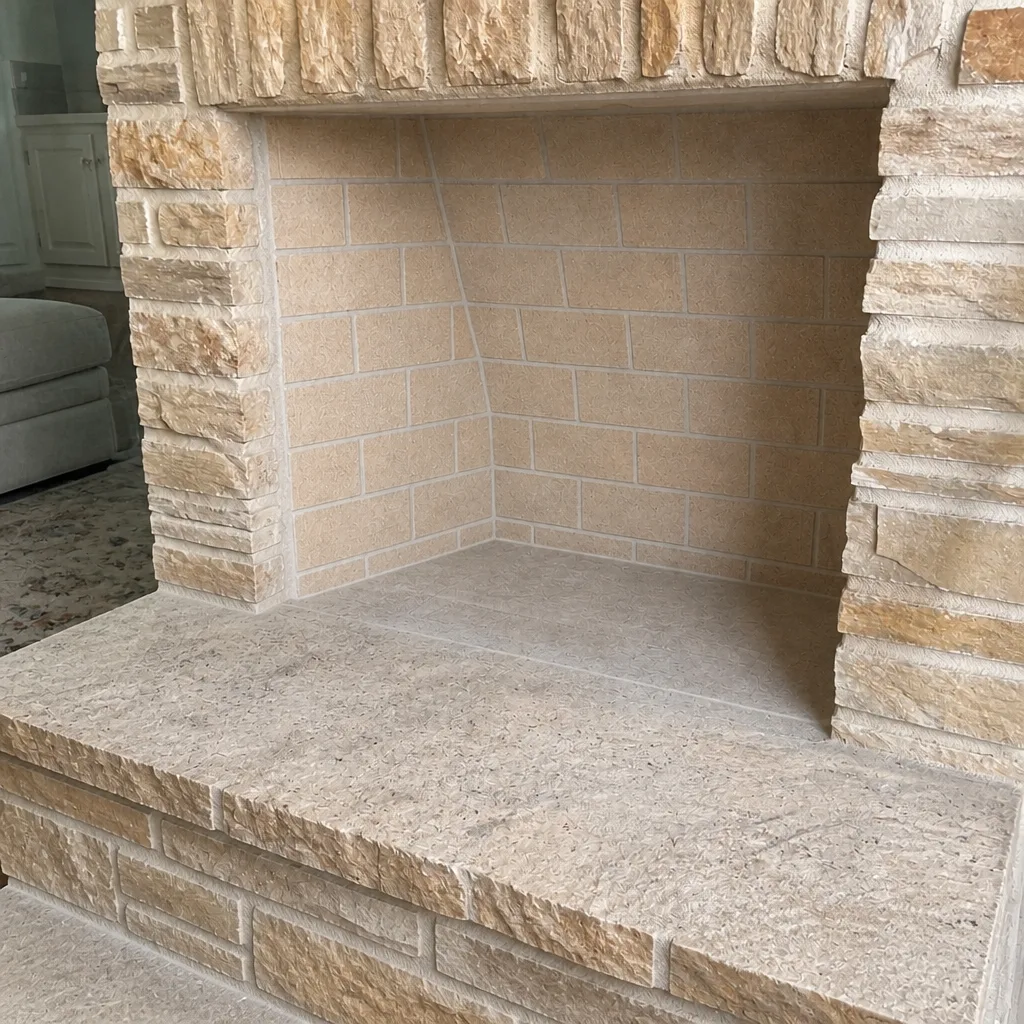
See the difference
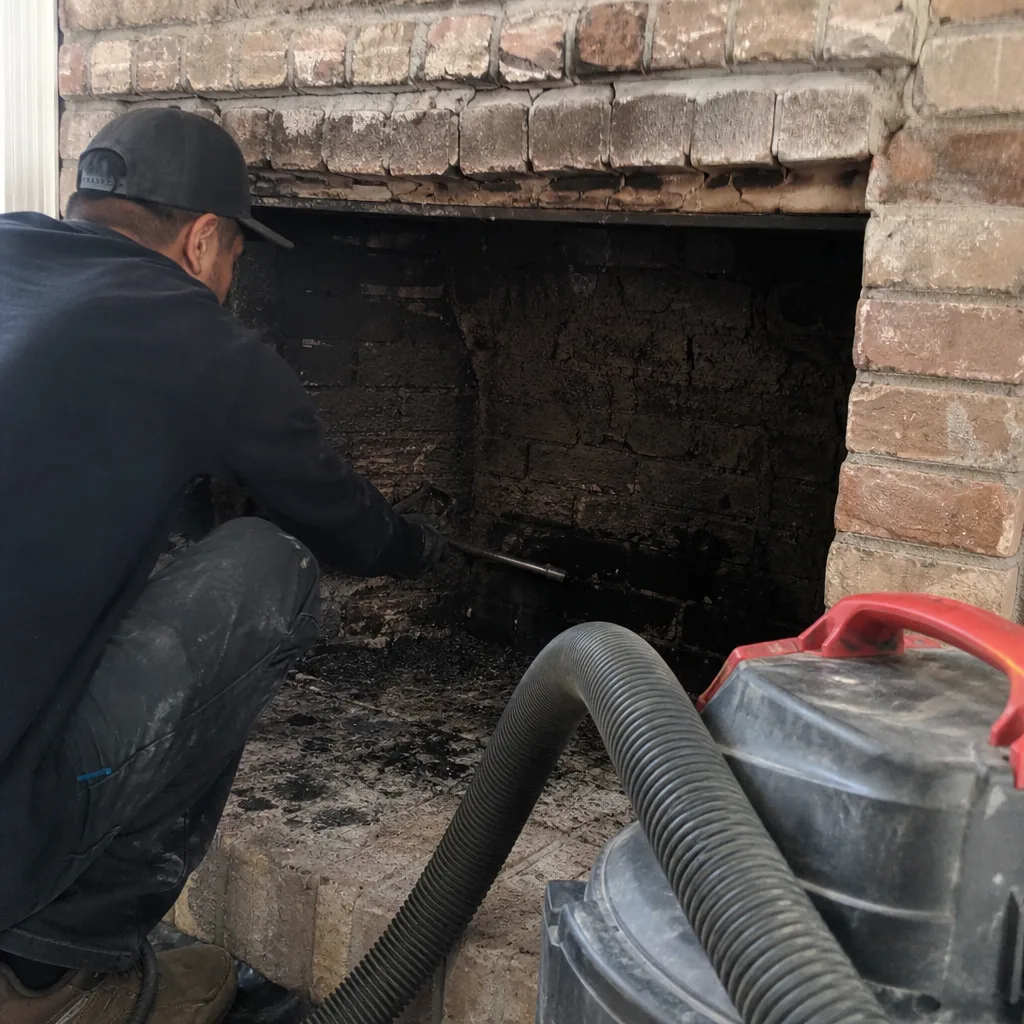 Before
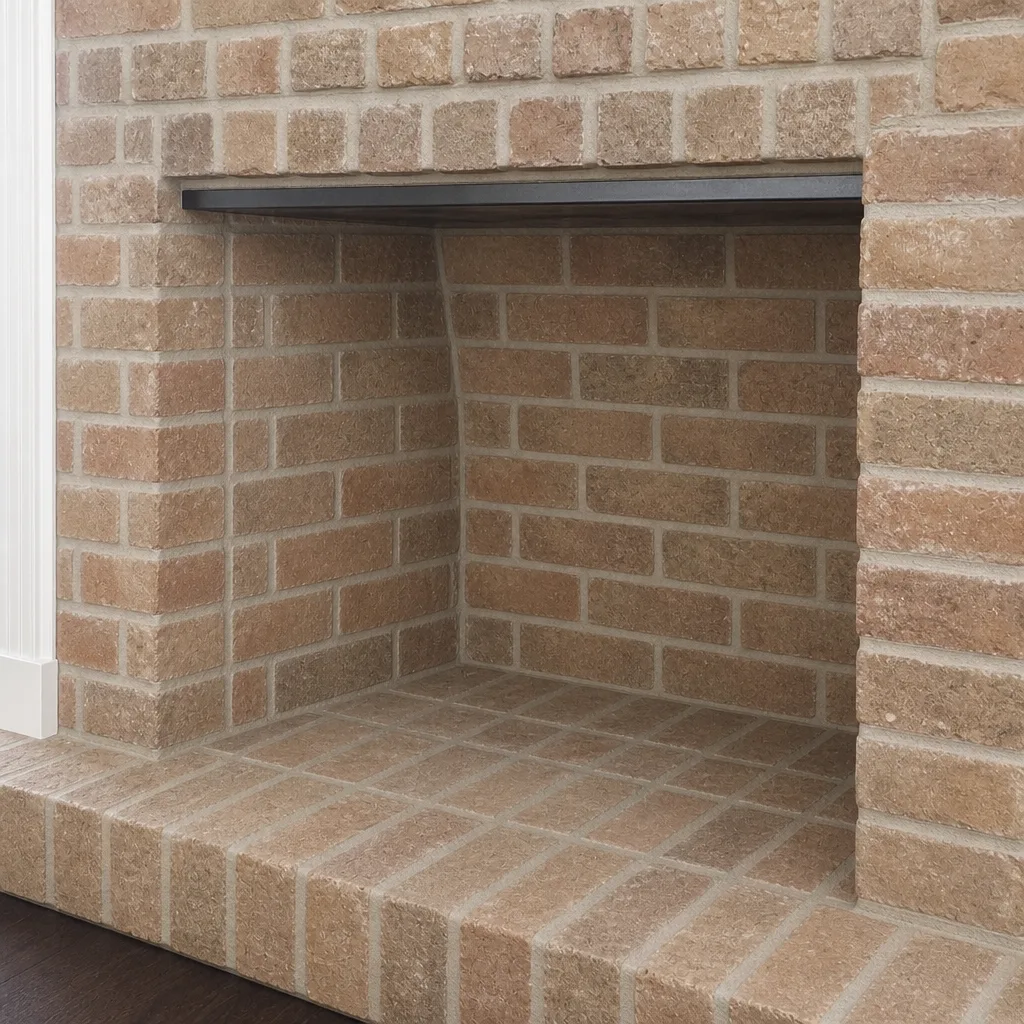 After
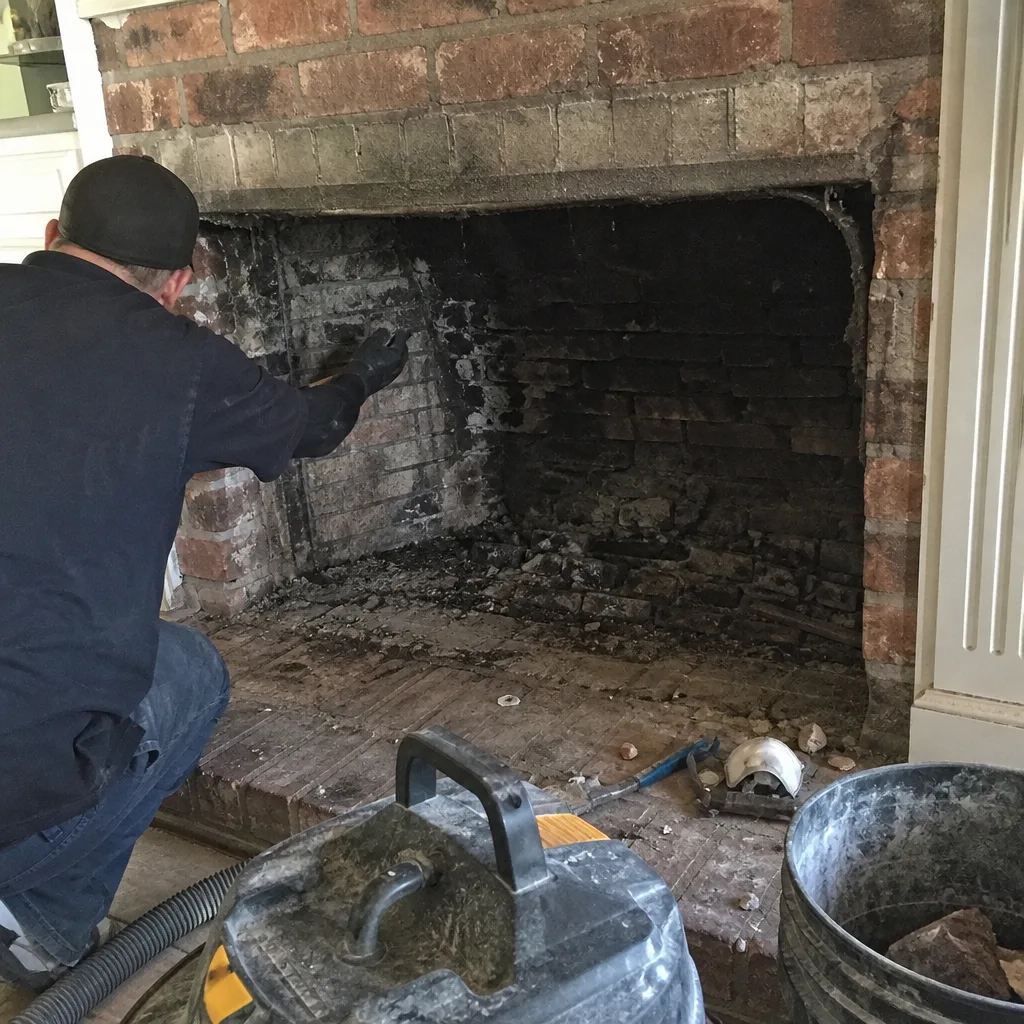 Before
 After
 Before
 After
When to Call a Professional
Call a professional chimney sweep in The Woodlands the moment any of these applies: your firebox has a smoke chamber you can’t fully see; your inspection report shows Stage 2 or Stage 3 creosote; your flue has any offset or bend; you have a zero-clearance fireplace or an insert; you’ve had a chimney fire of any size; you’re buying a home and need the flue documented; or your last professional visit was more than 18 months ago.
Also call if you’re not sure. A free estimate resolves the question faster than an afternoon with a brush kit and no way to see the interior. Highpoint Chimney Sweep offers free estimates in The Woodlands – call (844) 320-3258. We answer 24/7. Fast dispatch from 7am to 7pm, Sunday through Friday.
When we work on a chimney in The Woodlands, the visit usually covers more than cleaning. We’re able to look at the flue, identify what it needs, and complete the repair in the same engagement using trade-grade materials – DuraFlex stainless liner systems for rebuilding a compromised flue, and Olympia Chimney components for the parts that sit above the roofline. A sweep that ends at cleaning hands the problem to another company; we’d rather finish it ourselves.
Frequently Asked Questions
Yes, if your flue is straight, your recent inspection shows only Stage 1 creosote, and you burn seasoned wood in a masonry chimney with a sound clay tile liner. Every other configuration is a professional job. The Woodlands humidity makes Stage 2 deposits more common than homeowners expect, so confirm the creosote stage with an inspection before deciding. Call (844) 320-3258 to book an inspection – estimates are free.
A typical professional chimney sweep in The Woodlands runs $185-$320, and a sweep that includes camera inspection usually lands between $220 and $350. The written estimate sets the final price. When you call, ask whether the camera inspection is included, because that’s the piece that separates a real visit from a brush-and-go. Call (844) 320-3258 for an exact quote – estimates are free.
Yes, unless you already have one from the last 12-18 months. A camera sees the flue tile condition, the smoke chamber shelf, the liner seams, and the crown from the inside, none of which shows up in an eye-level look from the firebox. The inspection is the part that protects the house; cleaning is the visible result. Call (844) 320-3258 to book one – estimates are free.
Sweep when the creosote layer reaches 1/8 inch, which for a household that burns regularly through the cooler months usually means once a year. Even if no cleaning is needed, an annual inspection is worth having on the calendar. Homes that burn lightly some years can skip the sweep but shouldn’t skip the inspection. Call (844) 320-3258 to put an inspection on the schedule – estimates are free.
Creosote accumulates and eventually reaches Stage 2 or Stage 3, both of which are fire hazards that a hand brush won’t remove. The chimney fire risk climbs and stays elevated until the glazed layer is professionally cut down. Early identification costs nothing beyond the visit; deferred identification costs the visit plus liner repair. Call (844) 320-3258 to get eyes on the flue now – estimates are free.
Not usually, and no honest advisor can tell you how an adjuster will rule on a specific policy. Most homeowner policies cover accidental fire regardless of who cleaned the chimney. What having a professional inspection record does is remove the maintenance question from the claim review, which shortens the process and gives the adjuster a clear picture of the flue’s condition before the loss. Call (844) 320-3258 if you’d like an inspection on record.
The Bottom Line
DIY chimney cleaning is real – for a straight flue, Stage 1 creosote, and a homeowner who understands that the brush is only part of the job. It’s not real for offset flues, glazed creosote, gas inserts, zero-clearance fireplaces, or any flue with no recent inspection. The equipment, the creosote chemistry, and the insurance record all point the same direction: maintenance-level brushing between professional visits is a reasonable choice in The Woodlands; anything past that is a professional job. A free estimate resolves the question in one phone call, and we’re set up to sweep, inspect, and repair without handing you off to anyone else.
Written by the team at Highpoint Chimney Sweep.