
Last updated November 15, 2026
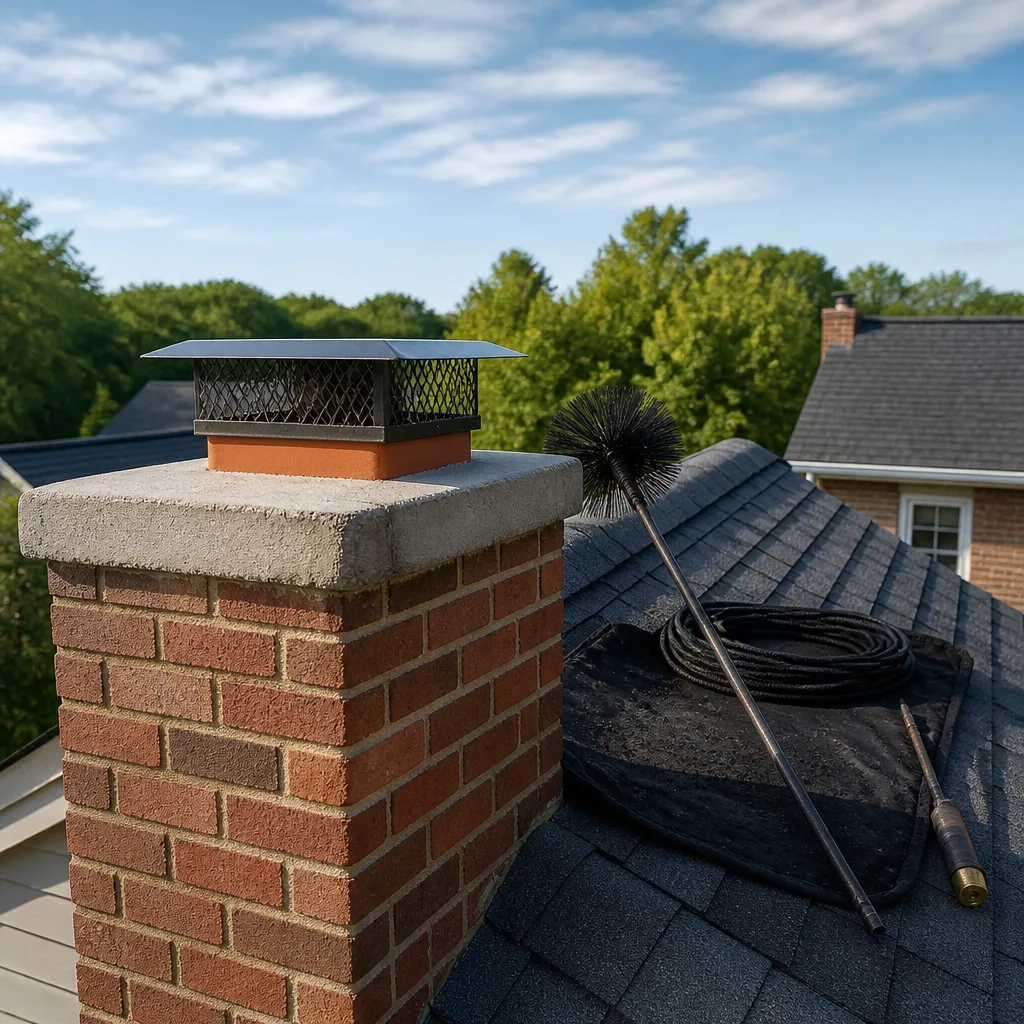 Sweep & inspection
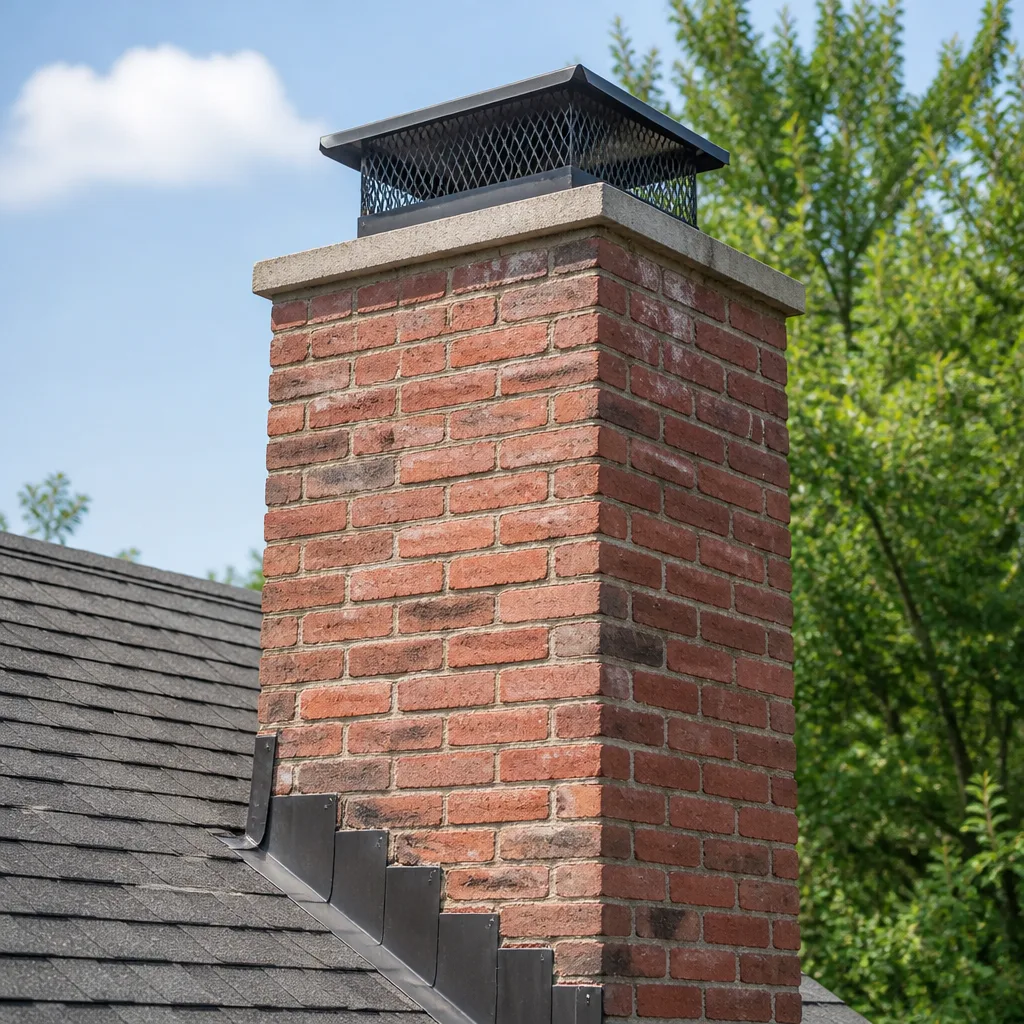 Caps & crowns
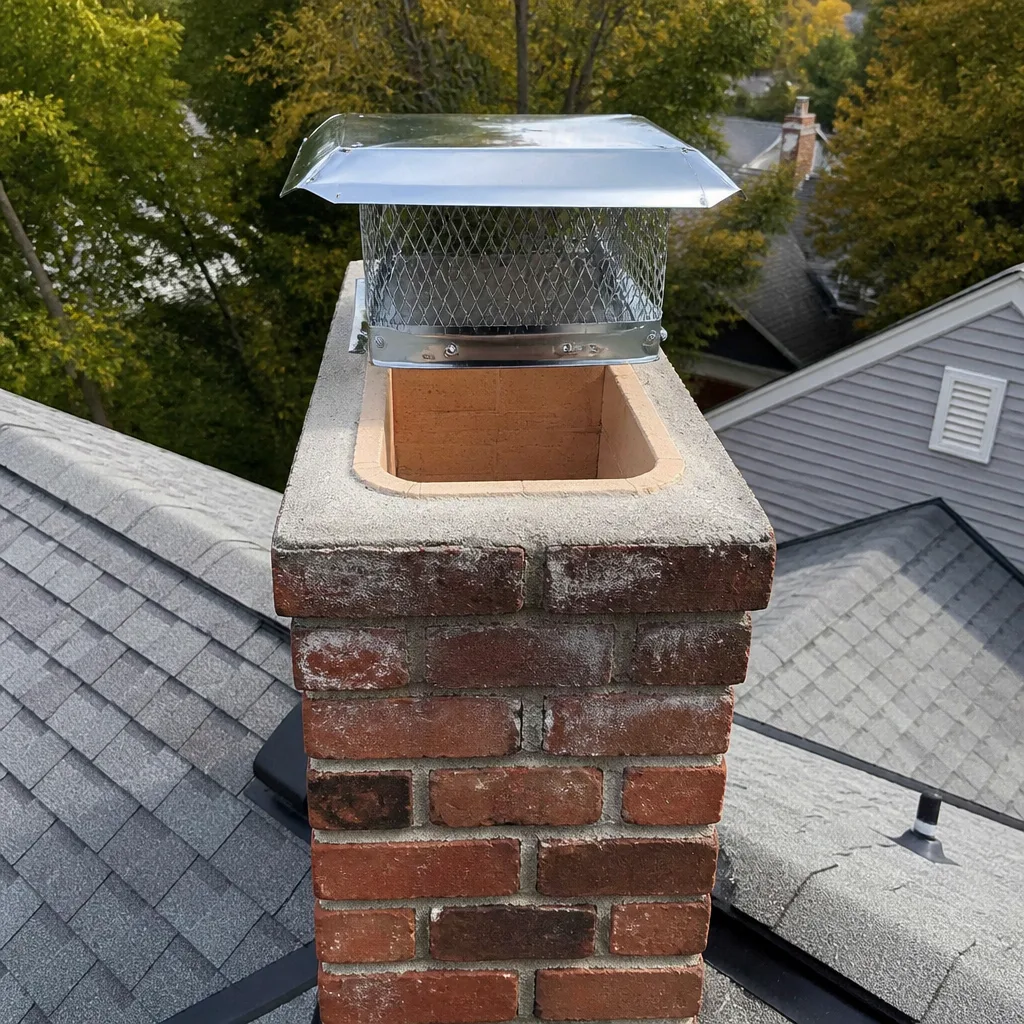 Flue relining
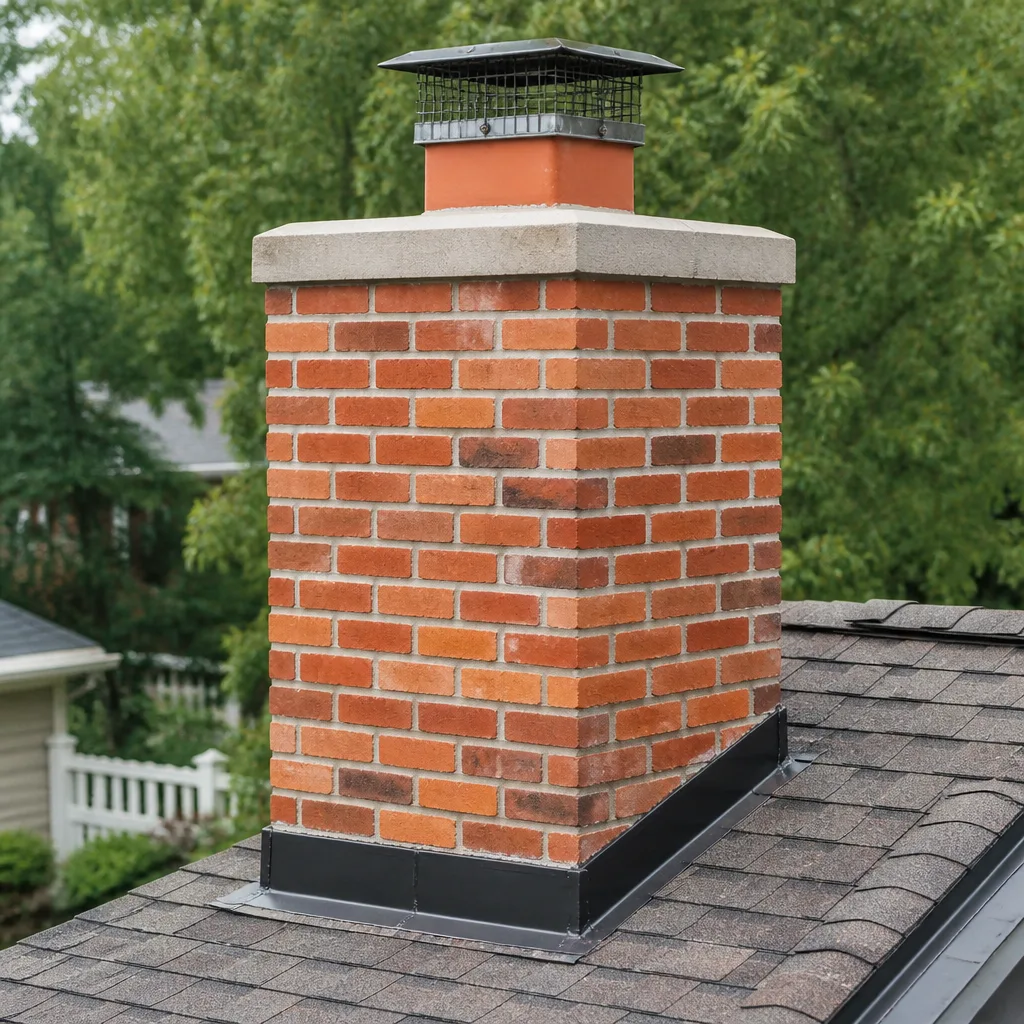 Masonry repair
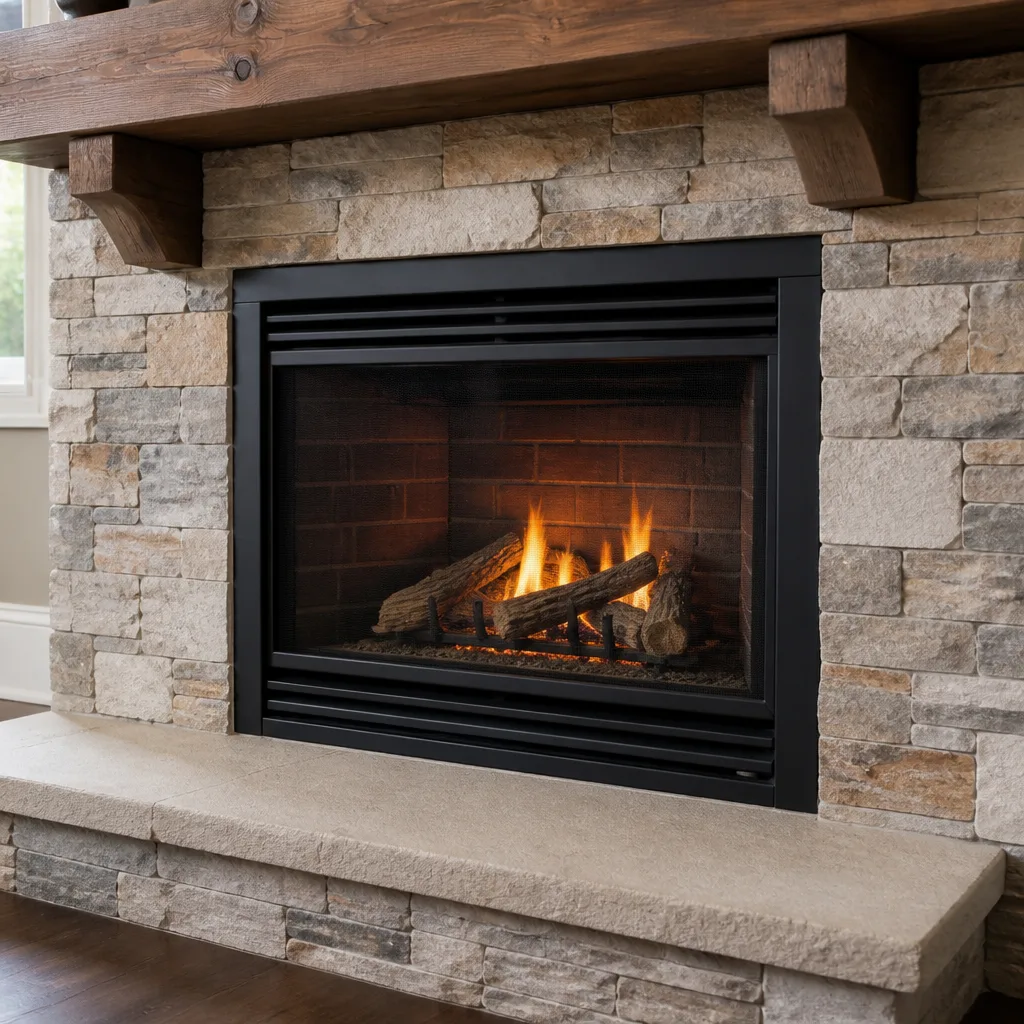 Gas fireplace service
Level 1 sweep and inspection to the NFPA 211 annual standard - flue, crown, cap, and flashing checked and photographed
Chimney sweep logs do not sweep chimneys. They loosen some creosote - which then falls where a brush and vacuum still have to collect it.
Choosing the Right Chimney Cleaning Brand: A Buyer’s Guide for The Woodlands
Most homeowners choose a chimney company by reading reviews and comparing sweep prices. That’s backwards. The cap on your chimney is described on every invoice as a “stainless steel cap,” yet the gauge of the steel, the mesh opening, and the alloy grade are what separate a cap that lasts fifteen years from one that corrodes in a handful of storm seasons. In The Woodlands, where humidity runs high and summer sun is unforgiving, the materials your technician installs outlive the company name on the truck. This guide explains which material categories actually matter, how to ask a sweep what they stock and why, and how to verify that the parts in your written quote are the parts that get installed.
Quick Answer
The right chimney cleaning company in The Woodlands is the one whose technician specifies and stocks trade-grade materials – liner systems like DuraFlex, ceramic resurfacing like HeatShield, and purpose-engineered caps like Gelco and Olympia Chimney – rather than ordering retail substitutes per job. Ask which brands they carry, why those brands, and how the installed material will be documented. A vague answer is your signal to keep looking. Material specification determines how long a repair holds in this climate, far more than the sweep’s hourly rate.
Styles & brands we work with
- Sweep & inspection
- Caps & crowns
- Flue relining
- Masonry repair
- Gas fireplace service
Table of Contents
- Why “Brand” Means Materials, Not Company Names
- Where Material Specification Actually Matters
- Retail Versus Trade-Grade: What the Packaging Won’t Tell You
- Stocked on the Truck Versus Ordered Per Job
- How to Ask a Sweep Which Brands They Use
- How to Verify What’s Actually Installed
- What The Woodlands Climate Asks of Chimney Materials
- Why One Company for Sweep, Repair, and Inspection Matters
Why “Brand” Means Materials, Not Company Names
When homeowners search for a chimney cleaning company in The Woodlands, they usually mean “which business should I hire.” That’s a fair question, but it’s the second question. The first is: what will this company put on my chimney? A chimney sweep’s core service is mechanical – brushing and vacuuming creosote out of a flue – and almost any competent sweep can do that with the same brushes and rods. The materials question surfaces the moment the sweep finds something: a cracked crown, a rusted cap, a liner joint that’s failing, a chimney that needs resurfacing before it can be safely used. That’s where the company’s sourcing model becomes visible, and where two bids that look identical on paper can produce repairs that last very differently.
In our experience, the brand conversation is really a supply chain conversation. A company that draws from a professional chimney supply chain has access to liner systems, crown sealants, caps, and flashing materials that were engineered for the specific job of venting a chimney safely for decades. A company that buys whatever’s on the shelf at the hardware store can still install it correctly and still hand you a clean chimney – but the material underneath is a different product with a different lifespan. The name on the invoice tells you who did the work. The name on the material tells you how long the work will hold.
This matters more in The Woodlands than in many markets because the local climate is hard on the outside of a chimney even while the weather is mild. Homes here sit under heavy summer humidity and long stretches of sun, then swing through cool, damp winters. Materials that would coast through fifty years in a dry climate get asked to do more here. That’s why material specification, not sweep labor, is the variable that separates a fifteen-year repair from a three-year one.
Where Material Specification Actually Matters
Not every part of a chimney job involves a material decision. The sweep itself is mostly labor and technique. But several categories are genuinely brand-sensitive, and those are the ones worth asking about before you authorize any repair work. Here are the categories where trade names show up in a written quote and where they should:
- Liner systems. A stainless steel flexible liner like DuraFlex is engineered with a specific alloy grade and wall thickness for chimney venting. The alloy grade determines how the liner handles heat and corrosive flue gases over time. Retail “stainless” flex duct sold for other purposes is a different product entirely.
- Ceramic resurfacing. HeatShield is a ceramic-based resurfacing system used to restore a damaged flue lining from the inside, rather than opening the chimney or installing a full reline. Not every sweep offers it, and the ones who do will tell you so.
- Caps and covers. Gelco and Olympia Chimney make purpose-engineered caps designed for chimney venting and animal exclusion. The gauge of the steel, the mesh size, and the way the cap attaches all affect how long it holds up outdoors.
- Crown sealants and coatings. The chimney crown – the concrete top that sheds water away from the flue – fails in stages. A crown coating specified for masonry chimney use behaves differently from a generic concrete sealer.
- Flashing and flashing tape systems. The transition between chimney and roof is where most water intrusion starts. Flashing materials specified for the job seal and stay sealed; hardware-store alternatives may not.
Each of these categories has a professional-tier equivalent and a retail equivalent that share a common name – “stainless,” “sealant,” “cap,” “tape” – but not a common specification. When a quote names a specific trade brand, that’s a signal the company has thought about the material category. When the quote says “new cap and flashing included” with no brand, that’s a gap you’re allowed to ask about.
Retail Versus Trade-Grade: What the Packaging Won’t Tell You
The same chimney cap, liner, or crown product sold under different labels can look nearly identical at the store and perform very differently over a decade in The Woodlands heat and humidity. The packaging doesn’t disclose what matters most, so it falls to the homeowner to know which specifications to ask about. The differences usually sit in four places:
- Alloy grade. “Stainless steel” spans a wide range of metal formulations. The specific grade used in a chimney liner affects how it responds to heat cycling and flue gas chemistry. Retail products often don’t state the grade; professional liner systems do.
- Steel gauge. Thicker steel resists denting, warping, and corrosion longer. A cap made from heavier gauge stock will visibly outlast a thinner one, and gauge is one of the most reliable proxies for how long a cap will hold up outdoors.
- Mesh size and design. Cap mesh must let flue gases escape freely while keeping animals and debris out. A mesh too fine restricts drafting; a mesh too coarse lets squirrels and birds in. Purpose-engineered caps specify mesh for the application.
- Fastener and attachment design. A cap that clamps securely to the flue tile in a way that respects wind loading will stay put through storms. A cap that depends on friction or a single set screw can loosen over time.
The practical takeaway: what separates a trade-grade cap from a retail one usually isn’t stated on the box. That’s why the most useful question a homeowner can ask isn’t “is it stainless,” it’s “which brand, and why did you choose it.” A technician who works with Gelco and Olympia Chimney caps will explain the reasoning without hesitation. A technician who hasn’t thought about it will give you a generic answer, and that tells you something useful.
Our technicians have up to 12 years of experience, and the pattern we’ve seen holds every time: the material choices made at the quote stage are the best predictor of whether a repair is still doing its job a decade later. That’s why we name what we install in writing – DuraFlex for liner work, HeatShield for ceramic resurfacing, Gelco and Olympia Chimney for caps. Naming the brand is a commitment.
Stocked on the Truck Versus Ordered Per Job
There’s a real difference between a technician who stocks trade-grade materials and one who orders per job, and it shows up in both scheduling and quality control. A stocked technician arrives with the right cap, the right liner fittings, and the right sealants already sorted – so the repair happens in the visit where the problem is diagnosed, and the material is inspected before it goes on your chimney. A technician who orders per job turns a one-visit repair into a two-visit repair, and each handoff introduces a place where specification can slip.
The quality-control difference is subtler. When a company stocks materials, the technician handles the product often enough to know which gauges, which mesh sizes, and which fittings actually do the job. Problems with a specific batch or a specific size surface quickly and get corrected. When materials are ordered per job, each order is an isolated event, and the technician may not see the specific product until install day. That’s when “the cap we ordered doesn’t fit exactly” becomes a conversation on your roof.
- Stocked: Repair completed in the same visit as inspection when the diagnosis is clear. Material inspected by the technician before install. Standardized specification across jobs.
- Ordered per job: Repair scheduled for a later date. Material often arrives on install day. Specification depends on the order having been written accurately at the quote stage.
Neither model is wrong in every case – a specialty cap or unusual flue size may need to be ordered no matter what. But when a company can stock and specify standard trade-grade materials, the practical result is fewer return visits and a cleaner paper trail from diagnosis to install.
How to Ask a Sweep Which Brands They Use
The most useful question a The Woodlands homeowner can ask a chimney sweep isn’t about price. It’s about materials. Ask it plainly and see what happens. A confident answer with names and reasons is what you’re looking for. A vague or defensive answer tells you something too. Here are the specific questions worth asking, and what to listen for:
- “Which brands of liner do you install, and why that brand?” Listen for specific brand names and a reason that ties the brand to chimney applications. DuraFlex is a common answer among companies that do serious relining work.
- “If my flue needs resurfacing without a full reline, do you offer a ceramic system?” HeatShield is the most common trade-tier answer. A sweep who only knows how to reline may not offer the option at all.
- “Which caps and covers do you stock?” Names like Gelco or Olympia Chimney signal a purpose-engineered answer. “Whatever’s available” doesn’t.
- “How is the material brand documented on my quote and on my invoice?” The answer you want is that the brand and the specific part appear on both. If the quote is vague, ask for a revised one before you sign.
- “If a repair requires a material you don’t stock, how do you source it?” A company that buys from a professional chimney supply chain can answer this without hesitation.
A good answer takes maybe fifteen seconds. A defensive answer – “we use the best materials” or “whatever the manufacturer recommends” – is your answer about the company’s sourcing. Not necessarily disqualifying, but worth noting. The homeowner who asks these questions gets a bid that’s not just priced but specified.
How to Verify What’s Actually Installed
Specifying trade-grade materials in a quote is only half the job. Verifying that the materials you authorized are the materials that end up on your chimney is the other half, and most homeowners never ask. Here’s a documentation standard to request before authorizing repair work:
- Get the brand and the specific part on the written estimate. Not just “new cap” but the brand and model or size. If the estimate doesn’t include this, ask for it in writing before you sign.
- Ask to see the material before it’s installed. When a technician arrives with the part, it should be removable from its packaging and inspectable. A quick look at the label and the gauge of the steel is a fair request.
- Request that the invoice names the installed product. The invoice is the record that matters if you ever sell the home or need warranty service. It should match the estimate.
- Ask about the parts of the job you can’t see. Crown coatings, flashing tape, and liner joints are enclosed. The technician can photograph the installation as it goes; a company that does this routinely will have no issue doing it for you.
- Save the documentation with your home records. Chimney materials often carry service lives measured in decades. When you need repair work a decade later, knowing exactly what’s already on the chimney is invaluable to whoever does the next job.
The standard isn’t difficult to ask for, and a company working with trade-grade materials should meet it easily. The proof of quality is documentation you can put in a folder and hand to the next person who works on your chimney, not a verbal promise from a company name.
What The Woodlands Climate Asks of Chimney Materials
Chimney materials face a different test in The Woodlands than they do in a dry climate. The main pressures are humidity and long sun exposure on the exterior, plus the mild but real winter season that gets the fireplace going from late fall through early spring. Exterior materials – caps, crowns, flashing, chimney masonry itself – spend the year cycling between hot, wet, and cool. That cycling is what separates a cap that holds up to fifteen years of local storms from one that corrodes or dents much sooner. Interior materials – liners, flue joints, ceramic coatings – deal with creosote chemistry and heat cycling rather than outdoor weather.
The practical implication is that The Woodlands homeowners should care more than most about the exterior materials category. A cheap crown coating might look fine after install, but the surface is the first thing to fail, and the failure lets water work its way into the masonry. Cap gauge and mesh design matter for the same reason – sustained summer heat and humidity are hard on metal that wasn’t engineered for the job. The interior side matters too, but that’s a fire-safety question rather than a weather question.
Because chimneys here run fewer months per year than in colder climates, homeowners sometimes assume their chimney needs less attention. The interior buildup can actually be harder, not easier, when a chimney fires hot and runs through cool-off cycles without a hard freezes to interrupt the pattern. This is why a scheduled chimney sweep is the starting point, not the finish line. The sweep tells you the interior condition; the material specification on any repair tells you how the fix will hold up outdoors.
Why One Company for Sweep, Repair, and Inspection Matters
The handoff is where quality gets lost. When a sweep-only company cleans your chimney and finds a cap problem, the ordinary path is: they recommend a repair, you call a separate company, that company comes to look, writes a new quote, orders materials, and schedules a second visit. Each handoff is a place where the original observation and the final specification can drift apart. Keeping sweep, repair, and inspection under one roof eliminates that drift entirely – the technician who finds the problem is the technician who specifies the material and installs it.
This is where our positioning comes from. Highpoint Chimney Sweep is built around the full lifecycle of a chimney, not the sweep alone. That means chimney repair work draws from a professional lineup – DuraFlex for liner systems, HeatShield for ceramic resurfacing, Gelco and Olympia Chimney for caps and covers – and the inspection that spots a problem is performed by the same operation that fixes it. Homeowners who prefer one accountable vendor find that this arrangement shortens the path from “we found something” to “it’s fixed and documented.”
The inspection piece is worth emphasizing because it’s the diagnostic underneath everything else. A camera-based inspection shows the homeowner the condition of the flue interior – the actual buildup, the actual joints, the actual crown condition – rather than a verbal description. That matters for two reasons. It lets the homeowner see for themselves whether a repair is genuinely needed, and it lets the technician specify the right material category rather than a generic one. The proof is the same standard from diagnosis to install.
Chimney repair and installation work at Highpoint draws from a professional supply chain – DuraFlex, HeatShield, Gelco, Olympia Chimney, Famco, and Copperfield – the brands contractors and chimney professionals rely on. Trade-grade materials, not hardware-store substitutes. We name what we install, and the written estimate is where you see it.
Common Mistakes to Avoid
- Choosing on sweep price alone. Sweep labor is a commodity; the moment a repair enters the picture, material specification is what determines lifespan. Two bids that differ slightly in sweep price can produce very different repairs if the materials underneath differ. Ask about materials before comparing price.
- Accepting a vague quote. A quote that says “new cap included” without naming the brand and specific part leaves the material choice to whoever installs that day. That’s a gap you can close with one email.
- Assuming “stainless” describes one product. Stainless steel spans a range of alloy grades and thicknesses. Two caps described as stainless can perform very differently outdoors over a decade. Ask for the gauge and the brand, not the generic term.
- Splitting inspection from repair. Getting a chimney swept by one company and repaired by another can leave two different observations and no single accountable record. In The Woodlands, where the outside of the chimney takes a beating from humidity, the observation and the repair should come from the same team.
- Skipping the inspection because the chimney looks fine. Internal flue condition – creosote buildup, joint integrity, liner condition – doesn’t announce itself from outside. A camera inspection shows the homeowner the actual condition, not a guess.
- Authorizing work without asking for the documentation standard. Brand and part on the estimate, brand and part on the invoice, photos of what got installed. If the company balks at any of that, it’s a signal.
- Judging chimney companies by their trucks. Company-branded vehicles don’t tell you which material is being installed. The brand on the cap, the liner, and the crown coat does. Keep the focus there.
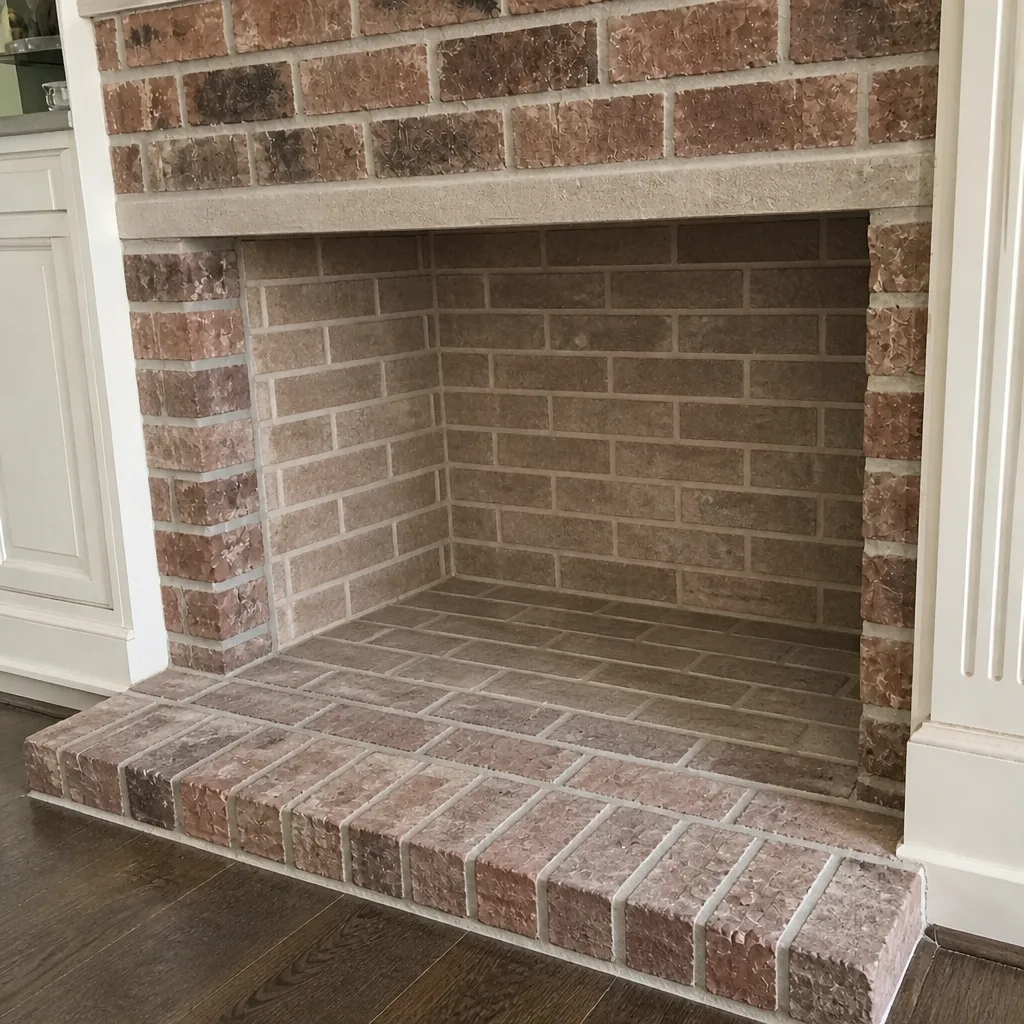
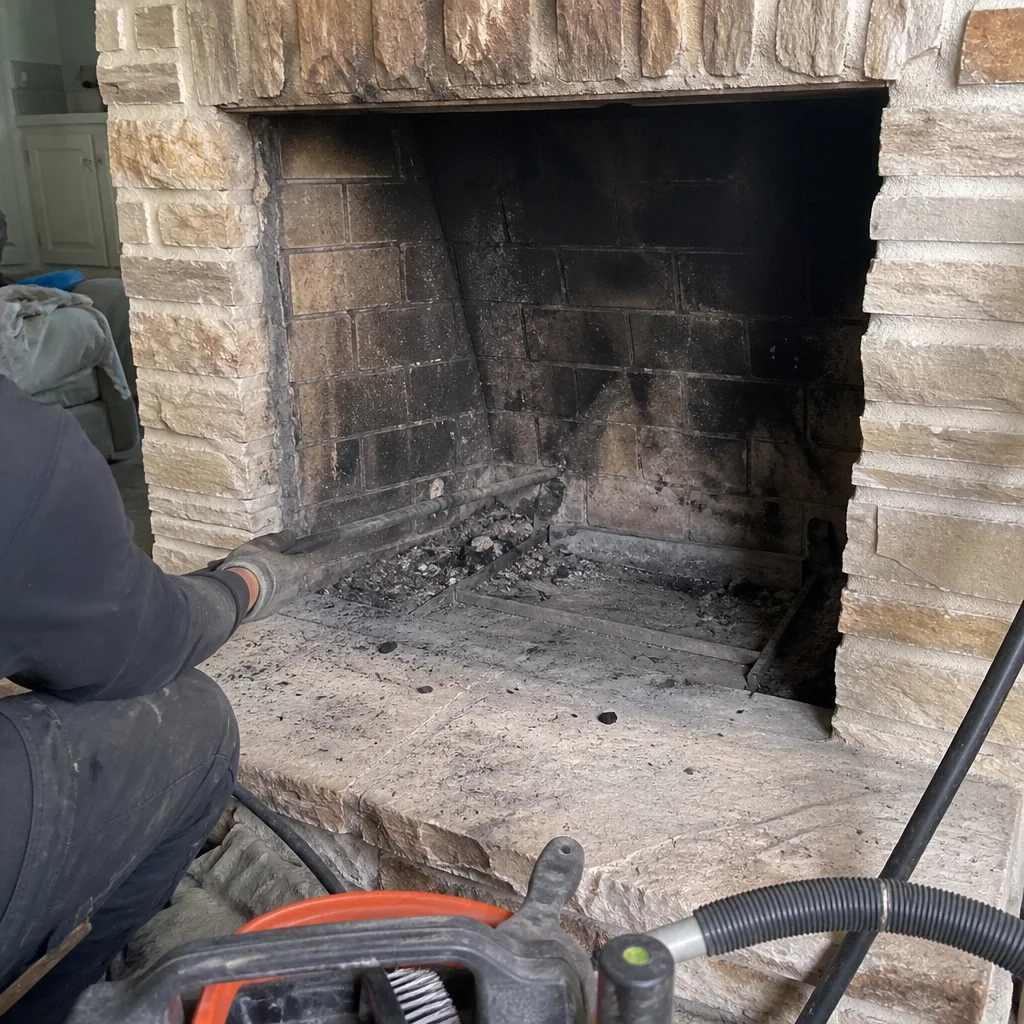
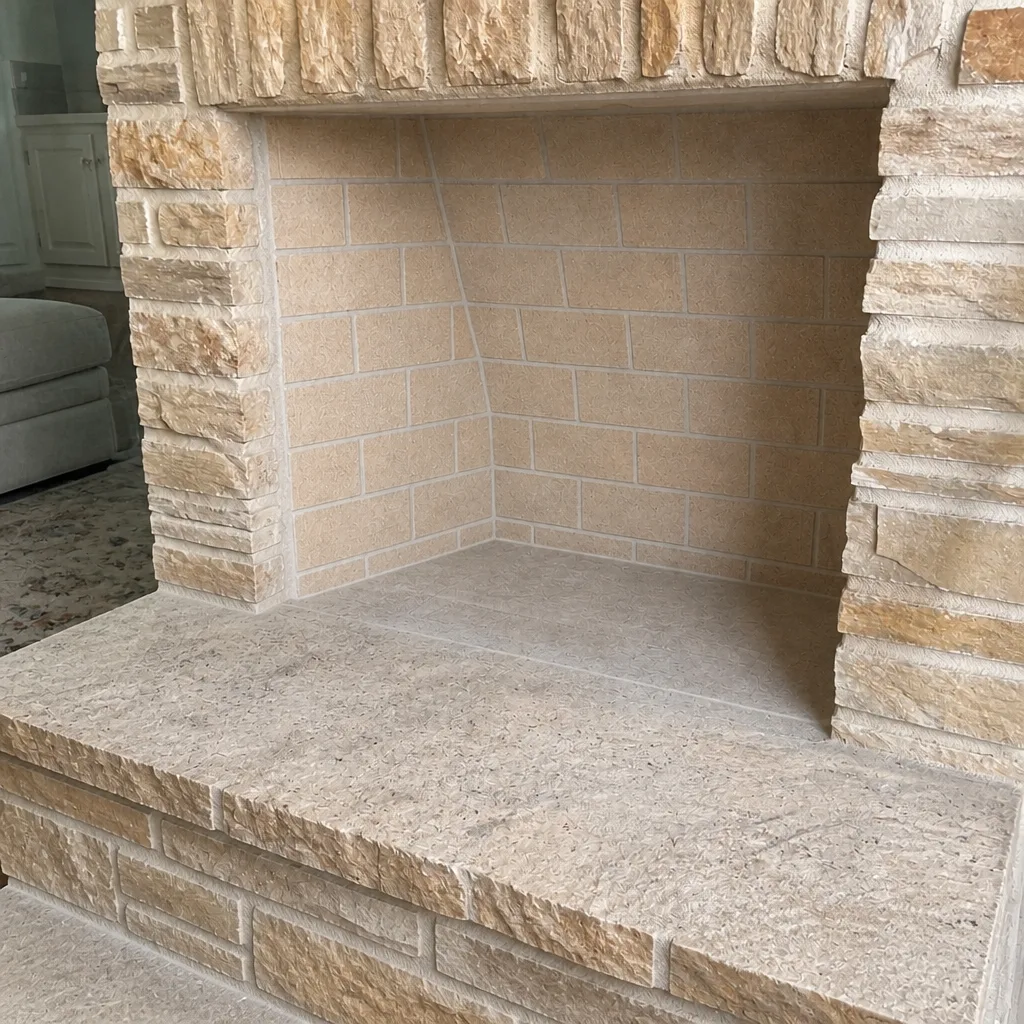
See the difference
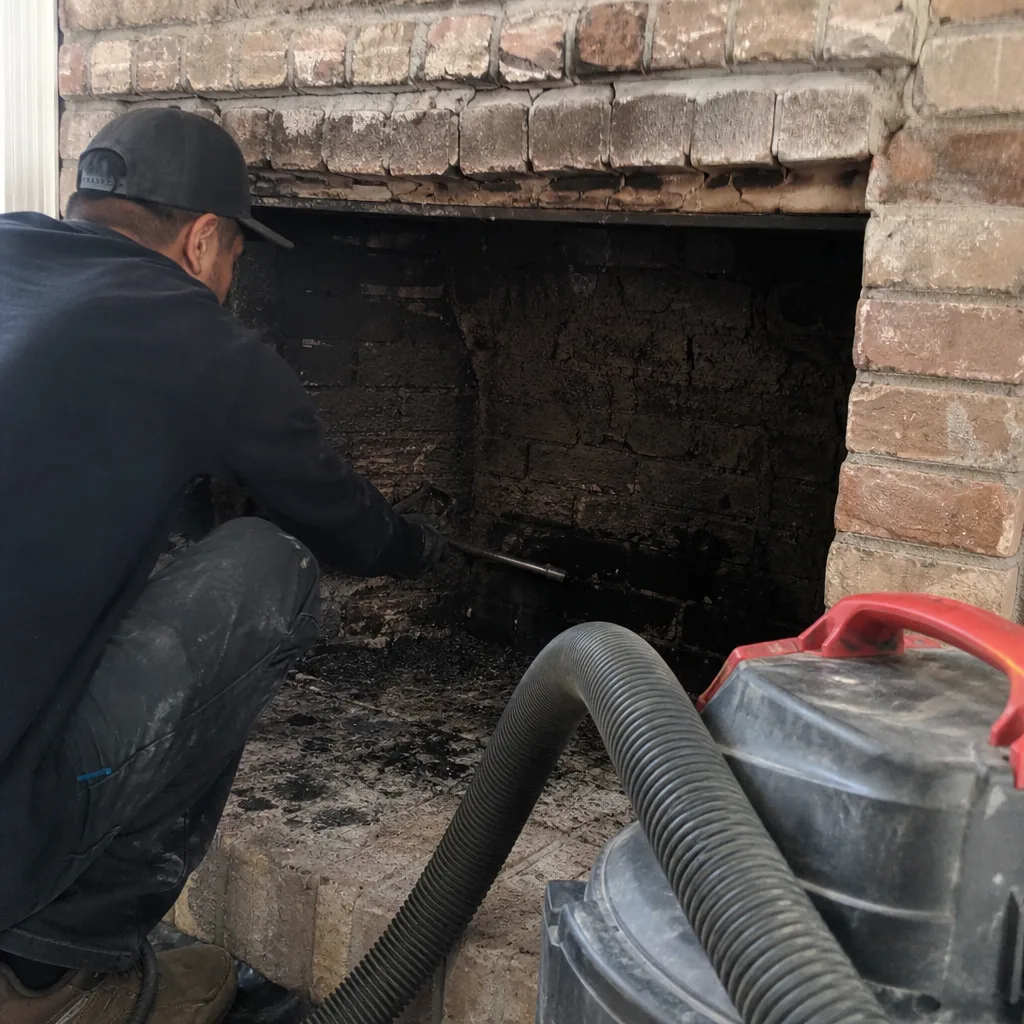 Before
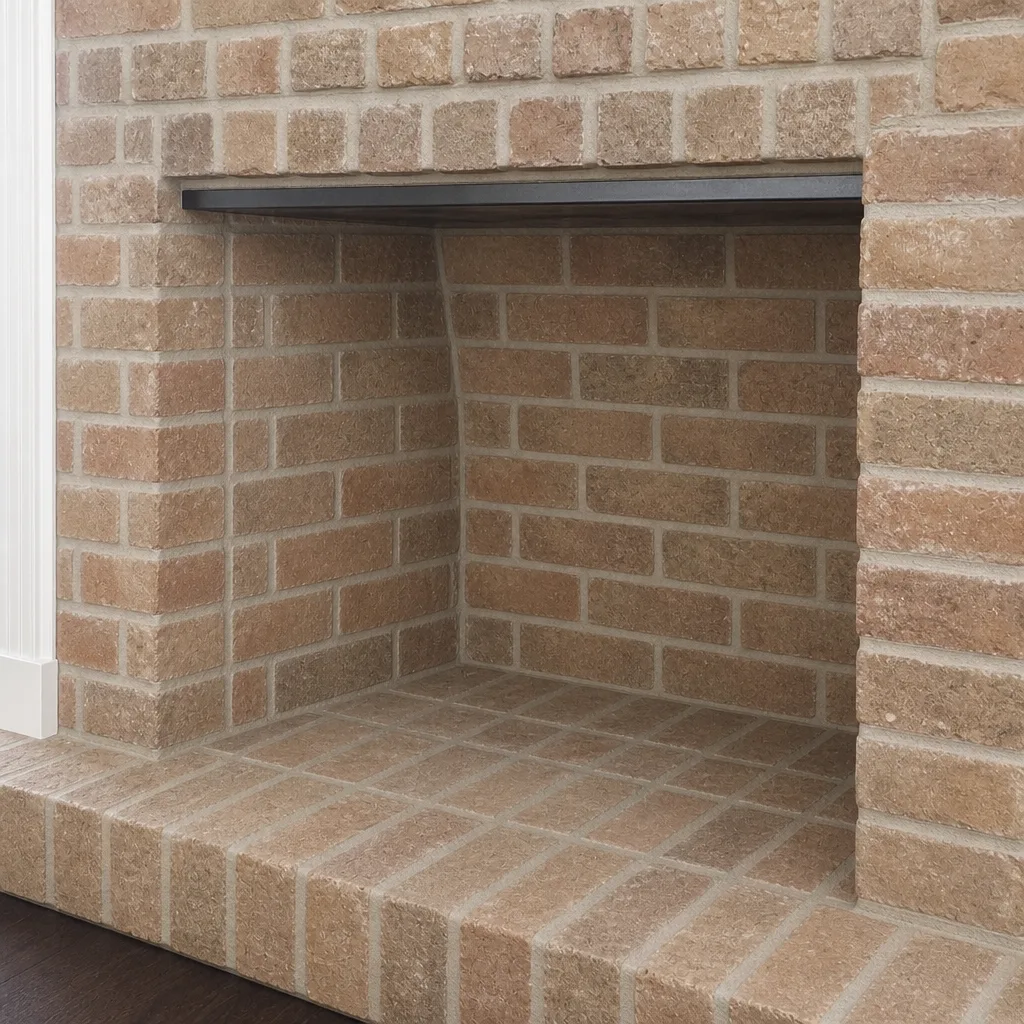 After
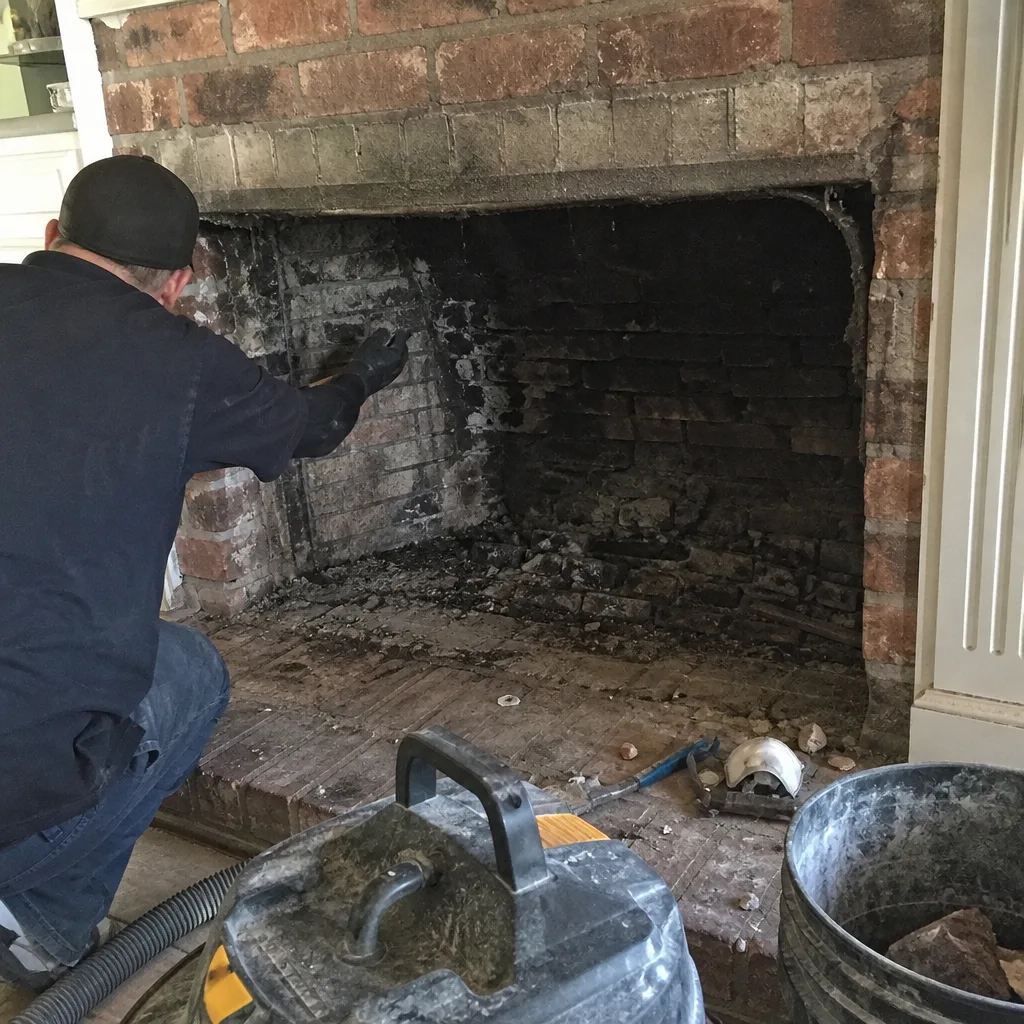 Before
 After
 Before
 After
When to Call a Professional
Call a professional when the chimney needs to be cleaned, when a repair is visible from outside or suspected from inside, or when a camera inspection is overdue. Specifically: when creosote buildup is visible, when the cap is damaged or missing, when the crown has cracks, when flashing has pulled away from the chimney, when smoke backs up into the home, or when you simply don’t know the last time the chimney was inspected. Highpoint Chimney Sweep offers free estimates in The Woodlands – call (844) 320-3258. We answer 24/7. Fast dispatch from 7am to 7pm, Sunday through Friday. If a problem is diagnosed that doesn’t require immediate attention, we’ll say so and explain what can safely wait.
Frequently Asked Questions
A standard chimney sweep in The Woodlands is typically an all-in estimate rather than a flat rate, and the written estimate sets the final price. The number depends on flue configuration, access, and whether an inspection is bundled in. Call (844) 320-3258 for an exact quote – estimates are free.
Not always, and that depends entirely on what the inspection shows. A camera inspection of the flue interior should establish whether the liner is intact, has failed joints, or has lost its ceramic coating – and only after that evidence should a reline be considered. If the liner is intact, the answer is no. When resurfacing can restore the flue instead of a full reline, HeatShield is a pro-tier option. Call (844) 320-3258 for a free estimate and a camera-based diagnosis.
Frequency depends on how much the fireplace is used, what’s burned, and the condition of the flue. A common rule is to have the chimney inspected once a year, and swept when the inspection shows buildup. In The Woodlands, where heavy fireplace use runs through the mild season, a yearly inspection is the minimum sensible standard. Call (844) 320-3258 to schedule an inspection – estimates are free.
Creosote accumulates in the flue over time and becomes harder to remove the longer it’s left. Skipping annual attention also means small problems – a failing crown, a cap that’s lost its mesh, flashing that’s pulled away – get a full year to worsen. None of this is a scare tactic, just accumulation. Call (844) 320-3258 for an inspection and a straight answer about the condition of your chimney.
Look for names tied to actual chimney applications: DuraFlex for liner systems, HeatShield for ceramic resurfacing, Gelco and Olympia Chimney for caps and covers. The brand name tells you the material category, and the material category tells you how long the repair will hold in this climate. Call (844) 320-3258 for a quote that names the materials.
You don’t have to be on the roof, but you should be home or reachable for the inspection walkthrough and the quote review. The walkthrough is where you see the camera evidence for yourself and ask the material questions from this guide. Call (844) 320-3258 to schedule the visit and discuss the walkthrough.
The Bottom Line
The right chimney cleaning company in The Woodlands is the one whose technician can name the materials they install and explain why. Specifying and stocking trade-grade brands – DuraFlex for liners, HeatShield for resurfacing, Gelco and Olympia Chimney for caps – is the practical signal of how a repair was thought through. Ask which brands, watch for a specific answer, get the brand on the quote and the invoice, and inspect the actual material before install. The name on the truck matters less than the name on the cap. The company that gets this right is the one worth calling.
To schedule an inspection, a sweep, or a repair in The Woodlands, call (844) 320-3258 for a free estimate. We answer 24/7. Fast dispatch from 7am to 7pm, Sunday through Friday.
Written by the team at Highpoint Chimney Sweep.